
Why Enterprise Brands Are Rethinking E-commerce Strategies
Navigating the Shifting Sands of Digital Commerce
E-commerce changes quickly. This forces even the biggest brands to review their strategies.
From changing customer needs to the rise of AI, the rules are different. Businesses must adapt to succeed.
This guide explains why brands are rethinking e-commerce and what they need to do to stay ahead.
E-commerce has become complex. Enterprise brands are leading this change. New technologies and changing customer behavior mean businesses operate in a dynamic environment. The goal is more than an online store. It is about a smooth, personalized, and engaging shopping experience. This builds customer loyalty and increases revenue. This article covers why brands are rethinking their e-commerce strategies. It outlines steps they can take to thrive in the future.
Let's get started.
Quick navigation
The Shifting Sands of Consumer Behavior
Customer preferences change quickly. Modern customers are informed, demanding, and connected. Enterprise brands must adapt to these expectations. Here are key shifts in customer behavior driving this review:
- Personalization: Customers want tailored experiences. They want brands to know their preferences. Offer personalized product recommendations, content, and communications.
- Seamless omnichannel experiences: Customers want to move between online and offline channels easily. Brands must provide consistent experiences across all touchpoints. This includes websites, apps, physical stores, and social media.
- Mobile-first approach: Mobile devices are the main way many customers shop online. E-commerce strategies must focus on mobile optimization. Ensure fast loading times, responsive design, and easy navigation on smartphones and tablets.
- Emphasis on sustainability and ethical sourcing: Customers care more about environmental and social issues. Brands must show they care about sustainability and ethical practices. This resonates with value-driven customers.
- Rising importance of social commerce: Social media platforms are becoming important shopping channels. Brands must use social commerce to reach customers. Offer smooth purchase experiences directly within these platforms.
The Impact of AI and Emerging Technologies
How do brands use AI and other new technologies in their e-commerce strategies? Artificial intelligence (AI), machine learning (ML), and other technologies are changing e-commerce. They offer new chances for brands to improve customer experiences, streamline operations, and drive growth. Here are some key technologies:
- AI-powered personalization: AI algorithms analyze large amounts of customer data. They provide personalized product recommendations, dynamic pricing, and custom content.
- Chatbots and virtual assistants: AI-powered chatbots offer instant customer support. They answer questions and guide customers through the buying process.
- AR/VR shopping experiences: Augmented and virtual reality let customers see products in their own environments. This provides a more immersive and engaging shopping experience.
- Predictive analytics: Machine learning algorithms analyze past data. They predict customer behavior, forecast demand, and improve inventory management.
- Blockchain for supply chain transparency: Blockchain technology can increase transparency in the supply chain. This builds trust with customers who value ethical sourcing.
Understanding Different E-commerce Business Models
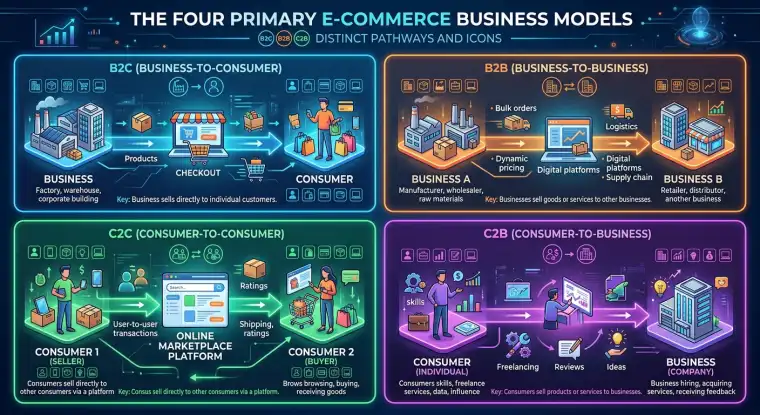
Do you know the different e-commerce business models? Brands have several options when creating their e-commerce presence. Each has unique advantages and things to consider. Here is an overview of some key models:
- B2C (Business-to-Consumer): This is the most common model. Businesses sell directly to individual consumers. Examples include online retail stores, subscription services, and digital content platforms.
- B2B (Business-to-Business): Businesses sell products or services to other businesses in this model. B2B e-commerce often involves complex transactions, bulk orders, and custom pricing.
- D2C (Direct-to-Consumer): Brands sell directly to customers. They avoid traditional retailers and distributors. This model offers more control over the brand experience and direct customer relationships.
- Marketplace: Brands sell their products on online marketplaces like Amazon or Etsy. Marketplaces provide access to many customers. However, they often have higher fees and less brand control.
- Subscription: Businesses offer recurring deliveries of products or services through subscriptions. This model is popular for consumable goods, software, and content.
The '7 C's' Framework for E-commerce Success
Are you familiar with the '7 C's' framework? This framework provides a guide for building and improving an e-commerce strategy. Here is a breakdown of the 7 C's:
- Customers: Understanding your target audience is important. Research their needs, preferences, and behaviors to tailor your e-commerce experience.
- Content: High-quality, engaging content is essential. This attracts and keeps customers. This includes product descriptions, images, videos, blog posts, and more.
- Convenience: Provide a smooth and easy shopping experience. This includes easy navigation, fast loading times, mobile optimization, and multiple payment options.
- Customization: Offer personalized product recommendations, content, and experiences. These are based on customer data.
- Community: Build a strong online community around your brand. Engage with customers on social media. Create forums and encourage user-generated content.
- Communication: Keep clear and consistent communication with customers. This includes email marketing, live chat, and timely responses to questions.
- Cost: Manage your costs effectively to ensure profit. This includes pricing strategies, shipping costs, and marketing expenses.
What this means for you
Enterprise brands must change their strategies to stay competitive. This needs a customer-focused approach that uses digital innovation. For example, brands must invest in:
- Data analytics: Use data to understand customer behavior and personalize experiences.
- Agile methodologies: Use agile approaches to quickly adapt to market changes.
- Technology investment: Upgrade technology for better scalability.
Enterprise brands are reviewing their strategies. They are adapting to digital transformation.
Risks, trade-offs, and blind spots
What are the potential problems in e-commerce? There are rewards with a strong e-commerce presence. There are also risks and trade-offs to consider. Here are some blind spots:
- Data privacy concerns: Brands must follow data privacy rules. They must handle customer data responsibly to build trust.
- Cybersecurity threats: Protecting customer data and payment information is important. This prevents fraud and maintains customer trust.
- Logistics and fulfillment challenges: Managing shipping, returns, and inventory can be complex and expensive.
- Competition: The e-commerce market is very competitive. Brands must be different through unique value and great customer experiences.
- Integration issues: Successfully integrating e-commerce platforms with other business systems can be challenging. Examples are CRM and ERP.
Main points
Enterprise brands are rethinking their e-commerce strategies. They are reflecting a changing digital landscape. Here are some key takeaways:
- Customer behavior is changing. There is a focus on personalization, mobile experiences, and sustainability.
- AI and new technologies are changing e-commerce. They allow personalized experiences and operational efficiency.
- Understanding different e-commerce business models is important for making decisions.
- The '7 C's' framework offers a plan for building a successful e-commerce strategy.
- Brands must prioritize customer-focused approaches and continuous innovation.
- Data privacy, cybersecurity, and logistics are important things to consider.
With careful planning, brands can create thriving e-commerce operations. To stay ahead, consider using SEO best practices. Enhance your brand's online presence, drive traffic, and boost sales. The future of e-commerce is bright for those who change.