

What Is Bounce Rate? A Comprehensive Guide to Understanding and Reducing It
Improve your website performance and boost your SEO with these actionable strategies.
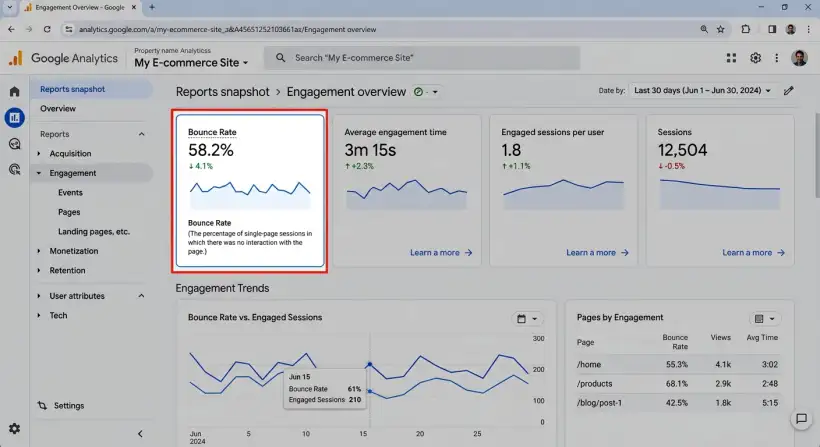
Do you wonder why visitors leave your website quickly? Understanding bounce rate is the first step to improve user engagement and search engine rankings.
A high bounce rate can hurt your website's success. Learn how to find and fix issues that drive visitors away.
This guide will give you the knowledge and strategies to understand and reduce bounce rate. You will have a more successful online presence.
Website performance is critical in the digital world. You must monitor bounce rate. What is bounce rate? Why does it matter? This guide will explain everything about bounce rate. You will get all the information you need to understand, analyze, and improve it. This guide provides insights to improve your website's performance. The main topic is bounce rate. We will cover everything from the basics to advanced strategies.
Let's begin.
Quick navigation
What is Bounce Rate?
Bounce rate is the percentage of visitors who land on a page and leave without interacting with it. Interaction includes clicking a link, filling out a form, making a purchase, or scrolling. If a visitor lands on a page and leaves without doing any of these, it's a bounce.
Think of it as the percentage of people who "bounce" off your website after viewing one page. Understanding this metric is key to evaluating user experience and website effectiveness. A high bounce rate means something isn't working as intended. It needs careful examination and optimization.
How Is Bounce Rate Calculated?
Calculating bounce rate is easy. The formula is:
Bounce Rate = (Total Number of Single-Page Sessions / Total Number of Sessions) * 100
For example, your website has 1,000 sessions. 700 of those sessions were users viewing one page before leaving. Your bounce rate is 70%. Web analytics tools, such as Google Analytics, usually perform this calculation. These tools track user behavior on your site.
What Is Considered a Good Bounce Rate?
There is no single "good" bounce rate. It depends on several factors, including the type of website, the industry, and the page's purpose. Here is a general guideline:
- 26-40%: Excellent. This is a very low bounce rate. It is often seen on websites with engaging content or a clear call to action.
- 41-55%: Average. This is a good range for many websites. It indicates a good level of user engagement.
- 56-70%: Higher than average. There is room for improvement. It is worth investigating the reasons for the high bounce rate.
- 70%+: High. This suggests issues with user experience, content relevance, or website design. You need to act immediately.
These are general guidelines. What is good for a blog may be different from what is good for an e-commerce site.
Why Is My Bounce Rate High? Common Causes
A high bounce rate can come from several factors. Identifying these causes is the first step to reduce it. Here are some of the most common reasons:
- Poor Content Relevance: If the content on your page doesn't match what the user searched for, they will likely leave quickly.
- Slow Page Load Speed: Users are not patient. If your page takes too long to load, they will bounce.
- Poor Website Design: A confusing or unattractive website design can drive users away.
- Bad User Experience (UX): Difficult navigation, intrusive ads, and poor mobile optimization contribute to a bad UX.
- Technical Issues: Broken links, server errors, and incorrect tracking code can lead to a high bounce rate.
- Irrelevant Keywords: Using keywords that attract the wrong audience can result in a high bounce rate.
- Lack of Clear Call to Action (CTA): If visitors don't know what to do next, they may leave.
- Poor Readability: Walls of text and poor formatting make it hard for users to engage with your content.
By finding the causes, you can adjust your strategies to fix the problems affecting your website's performance.
Strategies to Reduce Bounce Rate
Reducing bounce rate needs a strategic approach. It addresses different aspects of user experience and website optimization. Here are strategies you can use:
- Improve Content Quality: Create high-quality, relevant, and engaging content that matches user intent. Ensure your content addresses the user's search query effectively.
- Optimize Page Load Speed: Use tools like Google PageSpeed Insights to find and fix issues that slow down your page. Optimize images, use browser caching, and use a content delivery network (CDN).
- Enhance Website Design and UX: Make sure your website is easy to navigate, looks good, and is mobile-friendly. Use a clear and consistent design to guide users through the site.
- Improve Readability: Break up text with headings, subheadings, bullet points, images, and white space. Use a readable font size and style.
- Ensure Mobile Optimization: Make sure your website is responsive and provides a good experience on all devices.
- Use a Clear CTA: Guide your visitors with clear calls to action. Tell them what you want them to do next, whether it's reading another article, signing up for a newsletter, or making a purchase.
- Internal Linking: Link to other relevant pages on your website to encourage users to explore further. This can also improve SEO.
- Fix Broken Links and Technical Errors: Check for broken links and server errors regularly. Use tools like Google Search Console to monitor technical issues that may affect user experience.
- Target the Right Keywords: Use relevant keywords that align with your website's content and the user's search intent.
- Use Compelling Headlines: Write headlines that grab attention and accurately reflect the content of your page.
Implementing these strategies can significantly improve user engagement and decrease your website's bounce rate. Regular monitoring and adjustments are essential for continuous improvement. If you want to know more about the best SEO practices, you can check Search engine optimization.
What this means for you
Understanding and reducing your website's bounce rate has many benefits. It affects user experience. It influences several important aspects of your online presence:
A lower bounce rate means visitors find your content valuable and engaging. This leads to more time on site, more page views, and higher conversion rates. This also improves search engine rankings. Search engines like Google consider user engagement when ranking websites. A low bounce rate and more time on site signal your content is high-quality and relevant. This leads to higher rankings and more organic traffic. Optimizing your website for user experience boosts your SEO. It also improves your brand's reputation and credibility. When visitors have a positive experience, they are more likely to trust and engage with your brand.
Risks, trade-offs, and blind spots
The benefits of a low bounce rate are clear. It's important to know the potential risks and trade-offs. One of the main risks is misinterpreting the data. Not all high bounce rates are bad. For example, a blog post with all the information on one page might have a high bounce rate. Users get what they need and leave. Blind spots can happen if you only focus on reducing the bounce rate. Some strategies to reduce bounce rate, such as aggressive pop-ups or clickbait headlines, can annoy users and hurt your brand's reputation.
It's important to balance reducing the bounce rate and providing a positive user experience. Monitor your website's performance. Analyze user behavior. Adapt your strategies as needed.
Main points
- Bounce rate is the percentage of visitors who leave your website after viewing one page.
- Calculate bounce rate by dividing single-page sessions by total sessions and multiplying by 100.
- A good bounce rate varies depending on the website. Generally, 41-55% is average.
- High bounce rates are often caused by poor content relevance, slow page load speeds, and poor UX.
- Reduce bounce rate by optimizing content, improving website design, and ensuring mobile-friendliness.
- Lower bounce rates lead to more time on site and improved search engine rankings.
- Consider the context. A high bounce rate isn't always bad, especially for content-rich pages.
- Focus on UX. Don't sacrifice user experience to lower bounce rate.
Reducing bounce rate is ongoing. It needs constant monitoring and adjustments. By using the strategies in this guide, you can improve your website's performance, enhance user engagement, and boost your SEO. To help with your strategies, you can check the strategies.