

How to Optimize Products for Conversions: A Comprehensive Guide
Get more sales and improve business performance by optimizing your products for conversions.
Are your products reaching their potential? Turn website visitors into customers.
Conversion optimization is key to getting more sales and maximizing your return on investment.
This guide gives you steps to optimize your products for conversions and get more revenue.
In digital marketing, you must understand and optimize your product for conversions. This is not optional. This guide gives you strategies, methods, and examples to understand, calculate, and improve conversion rates. These apply whether you have an e-commerce store, run Google Ads campaigns, or manage a website. You can improve your customer's journey and get more sales by focusing on product optimization. This leads to better business performance. The main focus here is how to optimize products for conversions.
Conversion rate optimization (CRO) is improving the percentage of website visitors who take a desired action. This could be buying a product, filling out a form, or signing up for a newsletter. The goal is to make your products more appealing and your website easier to use. This encourages more conversions. Understanding how to optimize products involves analyzing user behavior, finding problems, and making changes. This leads to a better customer experience and higher conversion rates. This guide shows you how to achieve these goals and why it's a critical skill for any business owner or marketer.
Quick navigation
Understanding Conversion Rates
You must understand what conversion rates are and how to calculate them before you start optimizing. The conversion rate is the percentage of users who complete a desired action out of all users. For example, if 100 people visit your product page, and 5 buy something, your conversion rate is 5%. This is a key metric for evaluating how well your product pages and sales funnel work. A high conversion rate means your product is appealing, and the buying process is easy. But, how do you calculate conversion rates, and what are the best practices?
The basic formula for calculating conversion rate is: (Number of Conversions / Total Number of Visitors) * 100. Conversions can be any action, like a purchase, form submission, or newsletter signup. Checking your conversion rates regularly gives you insights into your product’s performance. It also helps you find areas to improve. You can analyze conversion rates by traffic sources (like Google Ads, social media, or organic search) to see which channels work best. This analysis lets you focus your optimization efforts where they will have the most impact.
Key Elements of Product Optimization
Optimizing products for conversions involves several key elements that create a good customer experience. These elements include product descriptions, high-quality images, clear calls to action, and social proof. Are these the only components? No. But, these are the key components. Let's explore them.
Product descriptions should be detailed, accurate, and engaging. Highlight the product's benefits instead of just its features. Use persuasive language and focus on how the product solves a customer's problem or improves their life. High-quality images and videos are important. These visuals give customers a clear understanding of what they are buying. Show your product from multiple angles, in use, and at different settings. This gives customers a complete view. Your product pages must also have a clear call to action (CTA), like “Buy Now” or “Add to Cart.” Make the CTA easy to find, using contrasting colors and compelling wording. Adding social proof, like customer reviews, testimonials, and ratings, can significantly increase conversions. This builds trust and reassures potential customers about the product's quality. When people see that others have had a good experience, they are more likely to buy.
Optimizing Product Pages
Product pages are the core of any e-commerce website. A well-designed product page can determine if you make a sale. What is the process for creating a powerful product page?
First, make sure your product page is easy to navigate and loads quickly. A slow page can lead to high bounce rates and lost sales. Optimize images, use caching, and choose a design that works well on all devices. Include complete product information. This includes detailed specifications, dimensions, materials, and any other important details. Customers like transparency, so provide as much information as possible to avoid surprises. Make sure you have clear and compelling product descriptions that emphasize benefits. Focus on how the product improves the customer's life or solves their problems, instead of listing features. High-quality images and videos are essential. Use multiple images from different angles, videos showing the product in action, and even 360-degree views. This gives customers a complete understanding of the product. Implement a clear call to action. Use a prominent, well-placed “Buy Now” or “Add to Cart” button with persuasive wording. Make it visually distinct and easy to find. Consider adding social proof. Add customer reviews, ratings, and testimonials to build trust and encourage purchases. Displaying trust badges, like secure payment icons, also helps reduce concerns.
Enhancing the Checkout Process
The checkout process is a critical point in the customer journey. A smooth and user-friendly checkout experience can greatly increase conversions. A complex or frustrating one can lead to abandoned carts. How can you make this step easier?
Make your checkout process simple. Reduce the number of steps to complete a purchase. Remove any unnecessary form fields. Offer multiple payment options, like credit cards, debit cards, and digital wallets like PayPal and Apple Pay. Provide clear information about shipping costs, delivery times, and return policies upfront. Surprises in these areas can lead to cart abandonment. Make sure your checkout process works well on mobile devices. A lot of online shoppers use mobile devices. Your checkout process must work well on all screen sizes. Consider offering guest checkout options. Requiring users to create an account can stop them from completing a purchase. Offer the option to check out as a guest. Implement trust signals, like SSL certificates, secure payment icons, and privacy policy links. These signals reassure customers that their information is safe. Reduce friction. Provide clear error messages and autofill features to reduce user effort. The easier the process, the more likely customers are to convert.
Leveraging Analytics for Optimization
Data is your most valuable asset when optimizing products for conversions. What can you do with analytics?
Use web analytics tools, like Google Analytics, to track user behavior on your product pages. Monitor key metrics, including bounce rates, time on page, and exit pages. This helps you find problems. Use heatmaps and session recordings to see how users interact with your product pages. Heatmaps show you where users click, scroll, and spend time. Session recordings give insights into their browsing experience. Set up conversion tracking to measure how effective your product pages and marketing campaigns are. Find which pages, products, and traffic sources drive the most conversions. Analyze user feedback, including customer reviews, surveys, and support tickets. This gives you insights into customer preferences and issues. Use A/B testing to compare different versions of your product pages and see which elements drive the best results. Test headlines, images, calls to action, and other elements to optimize your pages for conversions. By continuously analyzing data, you can make informed decisions to optimize your products and improve conversion rates over time.
A/B Testing Strategies
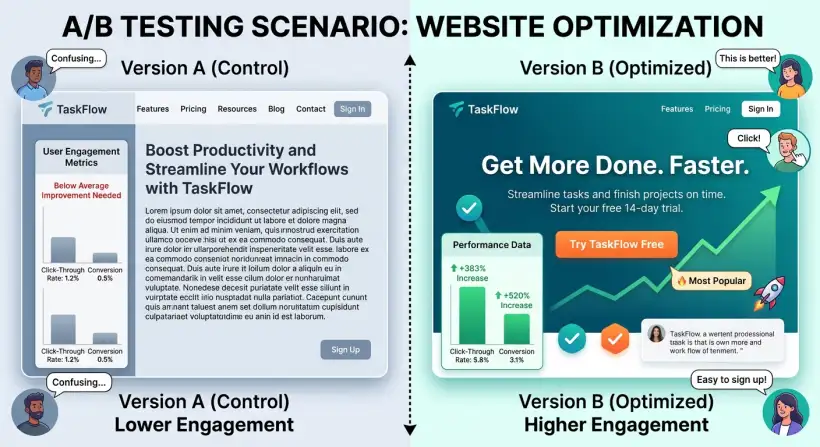
A/B testing is a method for systematically optimizing your product pages. It involves comparing two versions of a page (A and B) to see which performs better. What are some effective A/B testing strategies?
Set clear goals for your A/B tests. Decide what you want to achieve, like increasing click-through rates, boosting sales, or improving form submissions. Test one element at a time to see the impact of each change. This helps you understand which elements work best. Change the headlines on your product pages to see which ones your audience responds to best. Experiment with different calls to action, like “Buy Now,” “Add to Cart,” or “Learn More.” Change the images on your product pages to see if different visuals drive more conversions. Test different layouts and designs to see which one leads to a better user experience and higher conversion rates. Use A/B testing tools, like Google Optimize or Optimizely, to set up and manage your tests. These tools provide analytics and reporting to help you understand the results. Analyze the results of your A/B tests to see which version performed better. Implement the winning version and keep testing and refining your product pages. Always be testing. A/B testing is ongoing. Continue to test and optimize your product pages to maximize conversions.
What this means for you
Optimizing your products for conversions is not just a technical task. It's a strategic move that affects your bottom line. You can get many benefits by spending time and effort understanding and using the strategies in this guide.
Using effective product optimization strategies can significantly increase sales and revenue. By improving your conversion rates, you can get more sales without increasing your advertising spend. This means a higher return on investment (ROI) for your marketing efforts. A well-optimized product page provides a better user experience. Customers are more likely to stay on your page, engage with your content, and buy something. Focusing on conversion optimization often helps you better understand your target audience. You learn what they want, what they are looking for, and what makes them buy. This knowledge can inform all parts of your marketing strategy. Improving conversion rates can free up resources. Instead of spending more on advertising, you can focus on improving your existing product pages and checkout process. This can lead to cost savings and more efficiency. Conversion optimization is an ongoing process. You can stay ahead of your competitors by continuously testing, analyzing, and refining your product pages.
Risks, trade-offs, and blind spots
The benefits of product optimization are significant. It's also important to know the potential risks, trade-offs, and blind spots that can happen. Knowing these challenges helps you make informed decisions and avoid common problems. But, what should you keep in mind?
Over-optimization can make the user experience worse. While you want to improve conversions, avoid making your product pages too cluttered or pushing aggressive sales tactics. Focus on a good user experience. Some optimization techniques, like using too many pop-ups or intrusive elements, can hurt the user experience. This can lead to a higher bounce rate. A/B testing can take time and resources. Be ready to spend resources on testing, analyzing results, and making changes. It's an ongoing process that needs patience and effort. Relying only on data can limit your creativity. While data is important, don't be afraid to experiment with new ideas and approaches that may not be supported by data right away. Balance data-driven decisions with creative exploration. Not every change will lead to good results. Some tests might not improve things. See failures as chances to learn and refine your strategies. Consider the trade-offs of different optimization strategies. For example, focusing on reducing problems in the checkout process might mean you lose valuable data. Weigh the pros and cons of each approach. It's important to adapt to market changes. User behavior, technology, and customer preferences are always changing. Regularly review your strategies and adjust them to stay current.
Main points
- Understand Conversion Rates: Calculate and monitor your conversion rates to assess product page performance.
- Optimize Product Pages: Make sure product descriptions are detailed, accurate, and engaging, with high-quality images and clear calls to action.
- Enhance the Checkout Process: Simplify the checkout process and offer multiple payment options to reduce friction.
- Leverage Analytics: Use analytics tools to track user behavior, find problems, and measure how effective your optimizations are.
- A/B Testing: Use A/B testing to compare different versions of your product pages and find what works best.
- Focus on the User Experience: Make the user experience positive to improve engagement and conversions.
- Continuously Refine: Regularly review and refine your product optimization strategies based on data and user feedback.
- Consider the Risks: Be aware of potential risks, trade-offs, and blind spots to make informed decisions.
The journey to product optimization is a continuous process of learning, testing, and refinement. You can improve your conversion rates and get more sales by focusing on these strategies. Implement these changes now and watch your business succeed!