

SEO vs PPC: Which Digital Marketing Strategy Is Right for You?
A Comprehensive Guide to Choosing the Best Strategy for Your Business
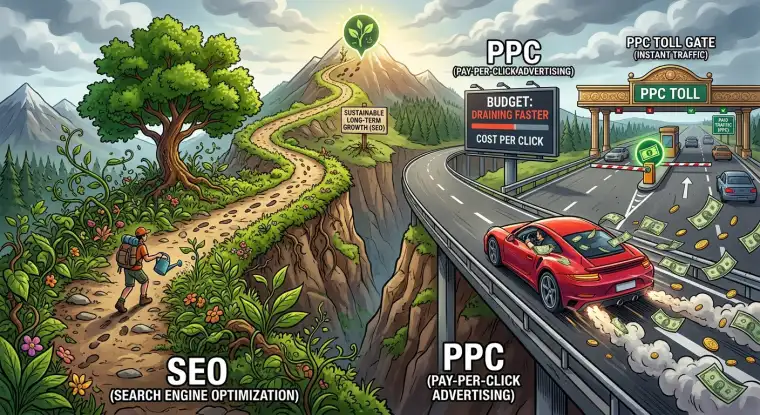
Are you trying to decide between SEO and PPC for your business? You are not alone. Many businesses face this issue, and each offers unique benefits and drawbacks.
Understanding the key differences and assessing your specific needs is important. This will help you make an informed decision and get the most from your marketing investment.
Let's look closely at SEO and PPC, comparing their costs, advantages, and how well they fit various business goals. Get ready to change your digital marketing strategy!
In digital marketing, choosing the right strategy can greatly affect your business's visibility and success. Two strong options often come up: Search Engine Optimization (SEO) and Pay-Per-Click (PPC) advertising. Both help attract online traffic and turn it into customers. However, they differ significantly in their approach, cost, and long-term results. This guide will break down SEO and PPC, providing a detailed comparison to help you choose the best strategy for your business goals and budget. The right choice in SEO versus PPC can make or break your online success.
Quick navigation
What this means for you
Deciding between SEO and PPC can feel overwhelming, especially with the ever-changing digital marketing world. However, understanding the main differences and your business needs will help you make informed decisions. Both SEO and PPC aim to increase your online visibility and drive traffic. However, they achieve these goals differently. SEO focuses on organic, unpaid results, needing consistent effort and time. PPC offers instant visibility through paid ads, making it attractive for quick wins. Which is the best choice for you?
SEO Explained: The Organic Approach
SEO is about optimizing your website to rank higher in search engine results pages (SERPs). This involves many strategies, including keyword research, content creation, on-page optimization, technical SEO, and link building. The main goal is to increase organic (unpaid) traffic to your website. SEO requires patience and a long-term view. Results usually take several months. However, once established, organic traffic can provide a steady source of leads and conversions.
The main parts of SEO include:
- Keyword Research: Finding the terms people use when searching for your products or services.
- Content Creation: Creating high-quality, relevant content that addresses user needs and includes target keywords.
- On-Page Optimization: Optimizing individual web pages with relevant keywords, meta descriptions, and header tags.
- Technical SEO: Making sure your website works well technically, with fast loading speeds, mobile-friendliness, and a secure HTTPS connection.
- Link Building: Getting backlinks from trusted websites to increase your site's authority and credibility.
PPC Explained: The Paid Advertising Route
PPC is a paid advertising model where you pay each time someone clicks on your ad. Google Ads is the most common platform for PPC. It lets you show ads on Google's search results pages and across its network of websites. PPC offers instant visibility. Your ads appear at the top of search results or on relevant websites as soon as your campaign starts. This can be a big advantage for businesses wanting quick results. However, PPC needs careful budget management and ongoing optimization to ensure a good return on investment.
Key elements of PPC include:
- Keyword Selection: Choosing relevant keywords for your ads.
- Ad Creation: Writing ad copy that attracts clicks and encourages conversions.
- Bidding: Setting bids for your keywords and ad placements.
- Landing Page Optimization: Designing effective landing pages that turn visitors into customers.
- Campaign Management: Regularly monitoring and optimizing your campaigns to improve performance.
SEO vs PPC: A Head-to-Head Comparison
Understanding the differences between SEO and PPC is important. Each has its own pros and cons. Let's compare them across several key aspects:
- Cost: PPC has direct costs per click, while SEO needs investments in time, resources, or specialized services.
- Time to Results: PPC provides immediate visibility, while SEO takes time to show results.
- Control: PPC offers more control over ad placement and targeting. With SEO, you depend on search engine algorithms.
- Sustainability: SEO provides long-term, sustainable traffic. PPC traffic stops when your budget runs out.
- Targeting: PPC lets you target specific demographics, interests, and behaviors, while SEO targeting is broader.
A big advantage of SEO is its long-term cost-effectiveness. Once your website ranks well organically, you will continue to get traffic without paying directly for each click. However, this needs consistent effort and patience. PPC offers immediate results and precise targeting. You can quickly reach your target audience and drive conversions. However, the cost per click can quickly add up, especially in competitive industries. The choice between SEO and PPC depends on your business goals, budget, and desired timeline for results.
Risks, trade-offs, and blind spots
Both SEO and PPC have risks and trade-offs. One of the main risks of SEO is the time needed. It can take months to see significant results, and there is no guarantee your website will rank well. Search engine algorithms change often, so your rankings can change. Also, relying on external factors, such as Google's algorithm, can be a blind spot for SEO. PPC carries the risk of high costs, especially in competitive markets. If your ads are not optimized, you could quickly spend your budget without results. PPC also needs constant monitoring and adjustments to maintain performance. Are you ready for these potential challenges?
Understanding these risks is key to making informed decisions and developing a strong marketing strategy.
Choosing the Right Strategy for Your Business
The best approach often includes both SEO and PPC. This combined strategy uses the strengths of both. It provides a balanced and effective approach to digital marketing. When choosing between SEO and PPC, consider these factors:
- Your Budget: PPC needs a budget from the start. SEO needs time and resources.
- Your Timeline: PPC offers immediate results. SEO takes time.
- Your Goals: PPC is ideal for quick sales. SEO builds long-term brand presence.
- Your Industry: Competitive industries often need a mix of SEO and PPC.
If you have a limited budget and need quick results, PPC may be a good starting point. However, if you want long-term sustainability and brand building, SEO is a better choice. In many cases, the most effective strategy is a mix of both SEO and PPC. SEO can build long-term organic traffic, while PPC provides immediate visibility and conversions. A combined approach lets you maximize your online presence and reach a wider audience. For example, using PPC to drive traffic to new content can boost your SEO efforts. Sustainability strategies can also improve organic traffic through useful content.
Consider the potential of each approach carefully. The strategic use of SEO and PPC, using all available strategies, is often the most effective way. You can also explore how AI in marketing is changing both SEO and PPC.
No matter which method you choose, understanding your business goals is essential. Your marketing efforts should align with these goals. For instance, focusing on fashion trends could help your SEO and PPC campaigns.
Main points
Choosing between SEO and PPC is an important decision for any business. Here’s what you need to remember:
- SEO focuses on organic rankings, needing time and consistent effort.
- PPC delivers immediate visibility through paid ads.
- SEO offers long-term, sustainable traffic, while PPC provides instant results.
- PPC needs careful budget management.
- Both strategies can work together for best results.
- Consider your budget, goals, and industry when deciding.
- SEO offers more sustainable and cost-effective benefits in the long run.
- PPC provides fast results but can be expensive and needs continuous optimization.
By carefully evaluating your business needs and goals, you can choose the right strategy—or combination of strategies—to succeed online. Use the insights from this guide and watch your digital marketing efforts thrive!