

Key Differences Between Magento ERP Systems: A Comprehensive Guide
Understand the core features and how they integrate.
Are you struggling to streamline your e-commerce operations? The right ERP system can help you scale your business. Which one is right for you?
Magento ERP systems offer a strong solution for businesses. They want to integrate their e-commerce platform with back-end operations. What makes it stand out?
This guide examines the key differences between Magento ERP and other ERP systems. You can make informed decisions about your business.
Businesses in e-commerce always look for ways to improve operations. They want to cut costs and improve customer experiences. Enterprise Resource Planning (ERP) systems are key for these goals. These systems combine business functions into one platform. They streamline processes and provide real-time information across the company. Magento, a top e-commerce platform, offers ERP features. It is a good solution for managing complex business processes. Understanding Magento ERP and how it differs from other ERP systems is important. This helps businesses improve their operations. This guide offers a complete look at Magento ERP. It highlights its key features, advantages, and how it compares to other ERP systems.
Are you new to ERP, or are you looking at different solutions? This guide offers insights to help you. You can choose the best system for your needs. This resource covers core functions, integration, costs, and long-term benefits. It dives into Magento ERP. You can make informed decisions to help your business.
Quick navigation
What is Magento ERP?
Magento ERP is a complete business management solution. It works with the Magento e-commerce platform. It streamlines business processes. These include inventory management, order fulfillment, accounting, and customer relationship management (CRM). Magento ERP provides a unified view of your business. This helps with better decision-making and efficiency. It centralizes data and automates tasks. This reduces errors, saves time, and optimizes resources.
Magento ERP is built to improve the e-commerce platform. It integrates with back-end operations. This is important for businesses that want a smooth customer experience. It also helps manage complex processes efficiently. The system also supports scalability. Businesses can change and grow without changing their core systems. Is Magento ERP right for your business?
How Does Magento ERP Differ from Other ERP Systems?
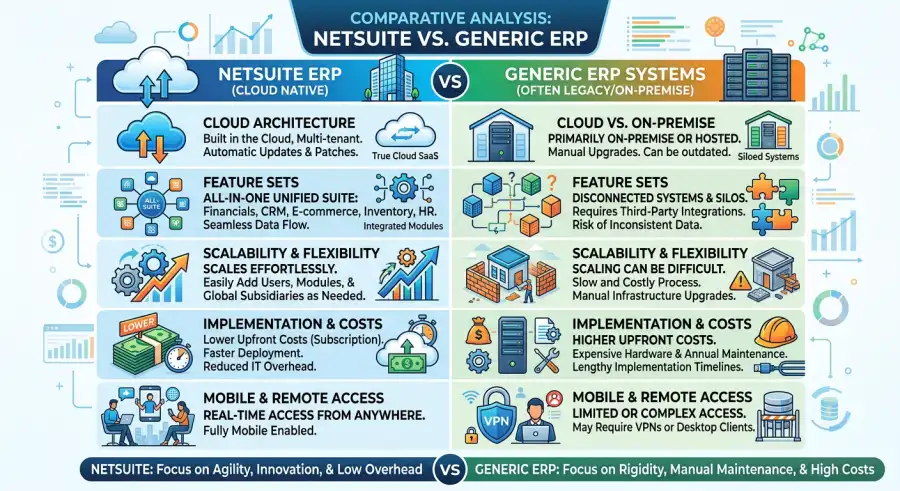
Magento ERP and other ERP systems both integrate business functions. However, there are key differences. One difference is the platform's origin. Magento ERP is for e-commerce businesses that use Magento. This focus means better integration and understanding of online retailers' challenges. Other ERP systems, like NetSuite or SAP, are more general. They work for many industries. But they might not have the same e-commerce features.
Another difference is their functions. Magento ERP often focuses on inventory management, order fulfillment, and customer relationship management. These are designed to improve the e-commerce experience. Other ERP systems may offer more features for manufacturing, supply chain management, or human resources. This varies based on the system and its modules. What advantages does Magento ERP have over other systems?
Key Features and Functionality of Magento ERP
Magento ERP has many features. They help businesses manage their operations efficiently. Inventory management is a core function. Businesses can track stock, manage warehouses, and automate stock replenishment. Order management includes order processing, fulfillment, and returns. This streamlines the order process. Magento ERP also offers CRM features. Businesses can manage customer data, track interactions, and personalize customer experiences.
Magento ERP's reporting and analytics are important for data-driven decisions. Businesses can create reports on sales, inventory, and customer behavior. They gain insights into their performance. Magento ERP often integrates with other systems. These include accounting software and payment gateways. This allows for smooth data flow and eliminates manual data entry. How do these features create a powerful ERP?
Benefits of Using Magento ERP
Magento ERP has several advantages for e-commerce businesses. One benefit is increased efficiency. Magento ERP automates tasks and centralizes data. This saves time and resources. Enhanced visibility is another key advantage. You get real-time insights into your business. This helps with better decisions and quick responses to market changes. Magento ERP also improves customer satisfaction by providing a smooth shopping experience.
Cost savings are a significant benefit. Automation reduces labor costs. Better inventory management minimizes waste and storage costs. Integration with accounting systems streamlines financial processes. It improves efficiency and reduces costs. Do the benefits match the reality of the software?
Integration Capabilities of Magento ERP
Magento ERP integrates with other business systems. This improves its function and provides a unified view of your business. One key integration is with the Magento e-commerce platform. This integration syncs inventory, order, and customer data. You get real-time information and avoid manual data entry.
Magento ERP also integrates with accounting software. This includes QuickBooks and Xero. It streamlines financial processes and improves accuracy. Integration with payment gateways like PayPal and Stripe helps. It processes payments and records transactions accurately. Magento ERP supports integration with CRM systems like Salesforce. Businesses can manage customer data, track interactions, and personalize experiences. How can businesses ensure smooth integrations?
Risks, trade-offs, and blind spots
Magento ERP offers advantages. However, there are risks and trade-offs. One challenge is the initial implementation costs. Setting up an ERP system requires investment. This includes software licensing, implementation, and training. Ongoing maintenance and support costs can increase. This is especially true if the system needs updates or customization.
Another trade-off is the complexity of implementation. Setting up an ERP system requires planning, data migration, and training. It can be a complex and time-consuming process. You may need help from professionals. Integration issues can affect data flow between systems. This can cause inefficiencies and errors. Businesses must consider vendor lock-in. This may limit their options and increase reliance on one provider. How can you address these issues?
What this means for you
If you use the Magento e-commerce platform, integrating Magento ERP can improve operations. It can reduce costs and improve customer experience. This integration gives you a unified view of your business. It allows for better decision-making and resource allocation. Automating processes can save time, reduce errors, and improve customer satisfaction. By integrating Magento ERP, businesses can streamline their e-commerce operations. You can provide a better experience for customers.
Implementing Magento ERP requires you to consider costs, complexities, and risks. Businesses need to assess their needs. You must evaluate implementation options and choose the right partner. You can make informed decisions. Align them with your goals and maximize your return on investment. Do you know everything before you commit?
Main points
- Magento ERP is an ERP system for e-commerce businesses using the Magento platform. It integrates inventory management, order fulfillment, and CRM.
- Magento ERP excels in e-commerce features. It integrates with the Magento platform and understands online retail challenges.
- Key features include inventory management, order processing, CRM, and reporting.
- Magento ERP increases efficiency, visibility, and customer satisfaction. It can save costs through automation.
- Magento ERP integrates with the Magento platform, accounting software, payment gateways, and CRM systems.
- Consider implementation costs, complexity, and vendor lock-in.
- Businesses can streamline e-commerce operations with Magento ERP. You can provide a better customer experience.
- Assess your needs and choose the right partner for successful implementation. This maximizes your ROI.
Choosing an ERP system is important. It can impact your business's success. By understanding the differences between Magento ERP and other systems, you can make an informed decision. Evaluate your needs. Consider the pros and cons. Choose the system that fits your needs.