

What Is Technical SEO? A Comprehensive Guide for 2026
Unlock the secrets to website optimization and higher search rankings.
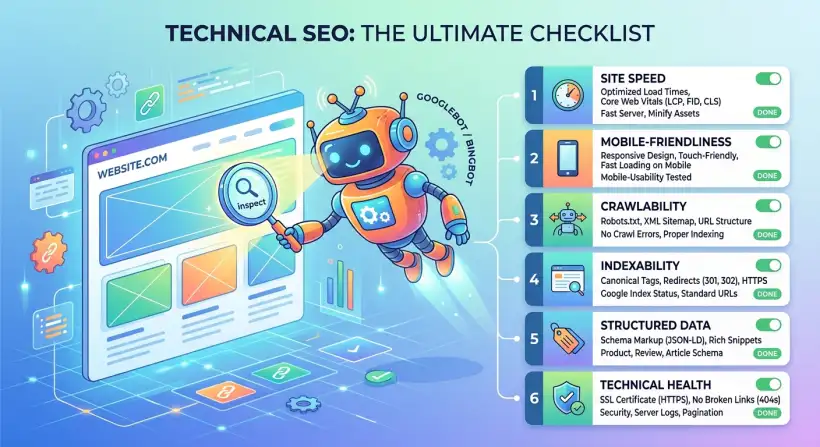
Do you wonder why some websites rank higher than others in search results? Technical SEO often holds the answer.
Technical SEO might seem complex. But it is essential for any website owner or marketer wanting online success.
This guide explains technical SEO. It shows you how to optimize your website for search engines and your audience.
Staying ahead in digital marketing is important. Technical SEO helps. It ensures search engines can crawl, understand, and index your website. Without a solid technical SEO foundation, your content might not be visible. This guide explains technical SEO, its importance, and how to implement it.
Technical SEO optimizes your website for search engine crawling and indexing. It ensures that search engine bots can access, understand, and rank your content. Good technical SEO improves website performance, user experience, and search engine rankings. By focusing on the technical aspects of your website, you improve your organic traffic and online visibility.
Quick navigation
What is Technical SEO?
Technical SEO includes all website optimizations that improve its technical setup. These optimizations are not seen by users. But they are important for search engine crawlers. Technical SEO focuses on the structure and behind-the-scenes elements of a website. It ensures search engines can access, crawl, interpret, and index content. Think of it as a car engine. You may not see it, but it's vital for performance.
Technical SEO ensures that search engines can:
- Crawl: Find your website's pages.
- Index: Add your pages to their database.
- Render: See your pages as users do.
- Understand: Grasp the context and meaning of your content.
Optimizing these technical aspects makes it easier for search engines to understand and rank your website. This can increase organic traffic.
Why is Technical SEO Important?
Why should you care about your website's technical aspects? Isn't creating great content enough? No. Great content needs search engines to find and understand it. Technical SEO supports your content's potential. If you don't optimize your site's technical elements, it can be hard to crawl, load slowly, and rank lower.
Here are reasons why technical SEO is essential:
- Improved Crawlability and Indexing: Technical SEO helps search engine bots crawl and index your website efficiently.
- Enhanced User Experience: A well-optimized website provides a faster and more user-friendly experience.
- Better Rankings: Proper technical SEO improves your search result rankings.
- Increased Organic Traffic: Higher rankings lead to more organic traffic.
- Competitive Advantage: Technical SEO gives you an edge over competitors who ignore these aspects.
Technical SEO is the foundation of your online visibility. It impacts your website's ability to be found by search engines and your audience. Would you like to be found more easily online?
Key Techniques and Best Practices in Technical SEO
Technical SEO includes many techniques to improve a website's technical health. Understanding and using these techniques is important for optimizing your website. These elements are essential for search engine success.
Here are some of the most important technical SEO techniques:
- Website Speed Optimization: Fast-loading websites provide a better user experience and are favored by search engines. This includes optimizing images, using browser caching, and minimizing code.
- Mobile-Friendliness: A responsive and mobile-friendly design is essential. Most searches come from mobile devices.
- XML Sitemaps: These sitemaps help search engines find and crawl all your website pages.
- Robots.txt: This file tells search engine bots which pages they can and cannot crawl.
- Structured Data Markup: Adding structured data (schema) helps search engines understand your content. This improves how it appears in search results.
- HTTPS Implementation: Using HTTPS (secure) is a ranking factor and provides a secure experience for users.
- Internal Linking: Linking between your website pages helps search engines understand the relationships between pages. This improves site structure.
- Duplicate Content Management: Addressing and resolving duplicate content issues ensures search engines index the correct version of your content.
By using these techniques, you can create a technically sound website that search engines and users will like.
How to Implement Technical SEO
Implementing technical SEO can seem difficult. But breaking it into steps makes it easier. A systematic approach, with the right tools, will improve your website's technical health. It's an ongoing process. But the results are worth the effort.
Here’s a practical guide to get started:
- Conduct a Technical SEO Audit: Use tools like Google Search Console, Screaming Frog, or SEMrush to find technical issues on your website.
- Optimize Website Speed: Use Google PageSpeed Insights to find areas to improve. Optimize images, use browser caching, and minimize code.
- Ensure Mobile-Friendliness: Use Google's Mobile-Friendly Test to ensure your website is responsive and provides a good mobile experience.
- Create and Submit an XML Sitemap: Generate an XML sitemap and submit it to Google Search Console to help search engines crawl your website.
- Implement Structured Data Markup: Use schema markup to provide search engines with context about your content.
- Manage Robots.txt: Properly configure your robots.txt file to guide search engine bots.
- Address Duplicate Content Issues: Use canonical tags and 301 redirects to manage and resolve duplicate content.
- Monitor and Analyze: Regularly monitor your website's performance using Google Search Console and other analytics tools.
Remember, technical SEO is an ongoing process. Regularly review and update your strategies. Where should you start?
Technical SEO vs. Other SEO Types
Understand how technical SEO fits into search engine optimization. Technical SEO is the foundation. Other SEO types focus on different website optimization aspects. A complete SEO strategy combines all these elements.
Here’s how technical SEO compares to other SEO types:
- On-Page SEO: This optimizes web pages to rank higher and get more relevant traffic in search engines. This includes optimizing title tags, meta descriptions, header tags, and content.
- Off-Page SEO: This involves activities outside your website to increase its authority and credibility. This includes building backlinks, social media marketing, and brand mentions.
- Content Marketing: This focuses on creating and distributing valuable, relevant, and consistent content to attract and engage a target audience.
Technical SEO is often overlooked. But it is essential for on-page and off-page efforts. Without a solid technical foundation, your content might not be visible. Your off-page efforts may not deliver the expected results. Do you want to build your SEO strategy on a solid foundation?
What this means for you
Understanding and using technical SEO can benefit your website and online presence. By focusing on technical elements, you can improve the experience for search engines and your website visitors. Investing time in technical SEO can improve your organic rankings. This can drive more traffic, leads, and conversions.
Here's what technical SEO means for you:
- Improved Search Engine Rankings: Better technical SEO leads to higher rankings in search results.
- Increased Organic Traffic: Higher rankings drive more organic traffic to your website.
- Enhanced User Experience: Faster loading times and mobile-friendly designs improve user satisfaction.
- Better Crawlability and Indexing: Search engines can easily crawl and index your website's content.
- Competitive Advantage: Stand out from competitors by having a well-optimized website.
Technical SEO is an investment in your website's long-term success. Are you ready to see real results?
Risks, trade-offs, and blind spots
Technical SEO offers significant benefits. But there are also risks, trade-offs, and areas that need care. Mistakes or a lack of expertise can lead to penalties from search engines. This can negatively impact your website. Approach technical SEO strategically and be aware of potential problems.
Here are some risks, trade-offs, and blind spots to consider:
- Algorithm Updates: Search engine algorithms change constantly. What works today might not work tomorrow. Stay updated on the latest changes.
- Technical Complexity: Technical SEO can be complex. Mistakes can be costly. Consider expert help if needed.
- Time Investment: Implementing technical SEO takes time and effort. It is an ongoing process that requires constant monitoring and optimization.
- Website Architecture: Poor website architecture can impede technical SEO efforts. Make sure your website structure is well-organized and user-friendly.
- Over-Optimization: Excessive optimization can lead to penalties from search engines. Focus on creating a natural and user-friendly experience.
By understanding these challenges, you can develop a stronger technical SEO strategy. What are some key steps that need to be followed to minimize the risks?
Main points
Technical SEO is important for a successful digital marketing strategy. It is about optimizing your website's behind-the-scenes aspects. This improves search engine visibility, user experience, and overall performance. By using the techniques and best practices in this guide, you can create a strong technical foundation for your online presence.
- Define Technical SEO: Technical SEO optimizes a website's technical setup for search engine crawlers.
- Prioritize Website Speed: Make sure your website loads quickly by optimizing images and using browser caching.
- Embrace Mobile-Friendliness: Provide a seamless mobile experience, as most searches are on mobile devices.
- Implement XML Sitemaps: Help search engines find all your website pages.
- Use Robots.txt: Guide search engine bots on which pages to crawl and index.
- Utilize Structured Data: Enhance how your content appears in search results.
- Focus on Internal Linking: Improve site structure and user navigation.
- Regularly Monitor and Analyze: Track your website's performance using tools like Google Search Console.
By prioritizing technical SEO, you are improving your search engine rankings. You are also creating a better experience for your visitors. Ensure your website is technically sound to maximize its potential. Start by conducting a thorough technical audit today and see the results!