

Why Flexible Platforms Dominate Modern E-commerce
A guide to understanding the power of adaptability in online retail.
In online retail, adapting is essential.
This guide explains flexible platforms.
Find out how businesses use adaptability.
The e-commerce world changes often. New technology appears, customers change, and trends evolve fast. You need an adaptable platform. This is why flexible platforms are important in modern e-commerce. Understanding and using these principles is key to online business success.
Quick navigation
What this means for you
If you use a flexible e-commerce platform, you will be more agile and responsive. You can adapt to market changes. You can use new chances. You can reduce risks. Customers will have a better shopping experience. They will be more loyal. You will make more money. A flexible platform helps you meet and exceed customer expectations.
The Pillars of E-commerce Flexibility
Several things make an e-commerce platform flexible. These components help businesses change quickly. What are these important components?
- Scalability: Handle changing traffic and sales.
- Customization: Change the platform to fit your business needs.
- Integration: Connect with other business systems.
- Modularity: Add or remove features without problems.
- Openness: Interact with other applications and services.
Key Frameworks for E-commerce
Some frameworks and principles help with e-commerce strategies. Knowing these can help businesses build a flexible online presence. Do you know these basic ideas?
- The 80/20 Rule (Pareto Principle): Focus on the most effective efforts. In e-commerce, this means focusing on the most popular products or optimizing high-traffic pages.
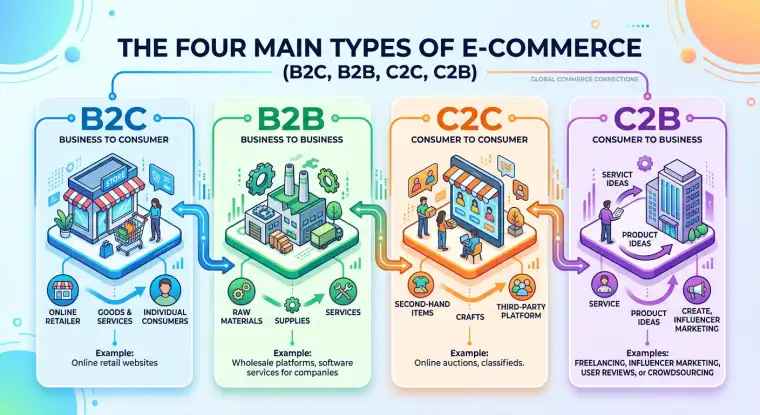
- Types of E-commerce: Understand the different business models (B2C, B2B, C2C). A B2B platform might need features like bulk ordering.
- The '4 C's' of Marketing: Customer, Cost, Convenience, and Communication. This framework focuses on understanding the customer, lowering costs, providing convenience, and communicating well.
Risks, trade-offs, and blind spots
Flexible e-commerce platforms have benefits. It is important to know the potential challenges. What are some things to avoid?
- Complexity: Flexible platforms can be complex. You need skilled people.
- Cost: Customization and advanced features can increase costs.
- Security: Open platforms and integrations can cause security issues.
- Over-customization: Over-engineering a platform can make it too complex.
To address these risks, you need careful planning and a clear strategy. Regular security audits and user feedback are important.
How E-commerce Facilitates Business Flexibility
E-commerce offers advantages that help with business flexibility. How does e-commerce help businesses adapt and succeed?
- Global Reach: E-commerce lets businesses reach customers worldwide.
- Data-Driven Insights: E-commerce platforms provide data on customer behavior. This helps businesses make decisions.
- Personalization: E-commerce allows for personalized customer experiences.
- Cost Efficiency: E-commerce can reduce costs compared to traditional stores.
Main points
Embracing a flexible e-commerce platform is important. Adaptability is key for businesses. What are the main points?
- Flexible platforms help businesses adapt to market changes.
- Key pillars include scalability, customization, integration, modularity, and openness.
- Understanding frameworks like the 80/20 rule can help your strategy.
- Complexity, cost, and security are risks to consider.
- E-commerce offers global reach, data-driven insights, personalization, and cost efficiency.
- A flexible platform improves customer experience.
- Businesses can use adaptability to meet customer demands.
- Prioritizing adaptability leads to more responsiveness and profitability.
By prioritizing flexibility, businesses can succeed in the e-commerce world. Assess your platform and plan for a more adaptable future today!